Downtown Columbus: A Buyer's Guide
Condos with river views, lofts in hundred-year-old office buildings and a growing neighborhood of people who walk to work, games and dinner. Here's how downtown breaks into pockets, what homes sell for in each and what to check before you buy.
- MLS sales, past two years
- 274
- median sale price
- $330K
- median HOA fee
- $488/mo
- median days on market
- 30
Columbus MLS closings in 43215 south of I-670, plus the Brewery District and east Franklinton, November 2024 to November 2026.
Downtown Columbus has changed a lot in 25 years. Where there used to be a prison, a closed mall and a lot of surface parking, there are now riverfront parks, an arena, a ballpark and a few thousand condos and apartments. About 13,500 people live downtown today, and the city's plan calls for 40,000 by 2040.
Buying here is different from buying in the suburbs. Nearly every home is a condo, so the building matters as much as the unit: the HOA fee, what it covers, the parking and whether a tax abatement is running out. This guide covers what I walk clients through before the first showing.
Where it is
Downtown sits inside a ring of freeways. I-670 runs along the north edge, I-71 along the east, I-70 along the south and the Scioto River curves along the west. High Street runs down the middle, and the Statehouse at Broad and High is the center of it all.
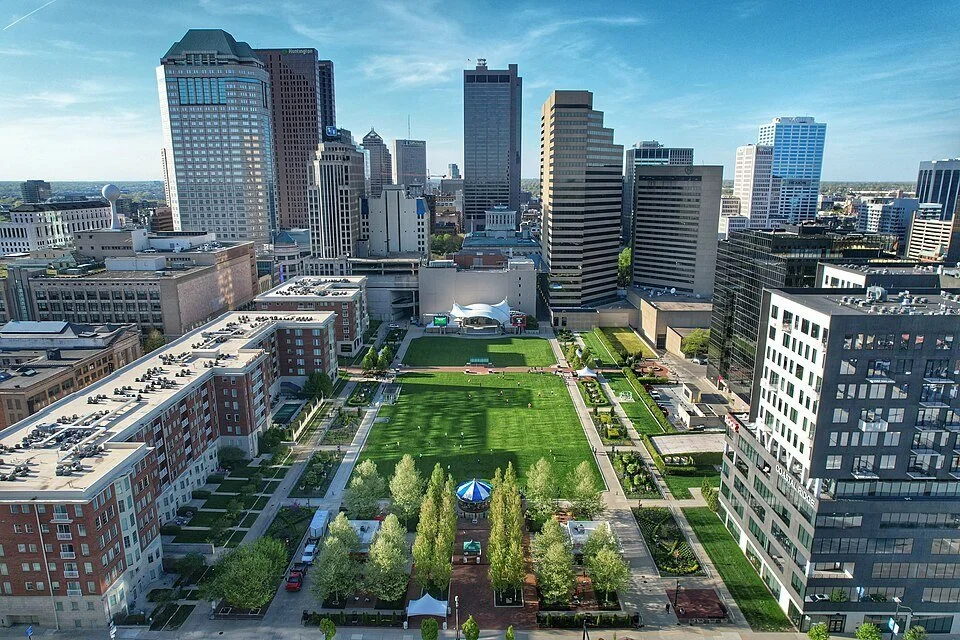
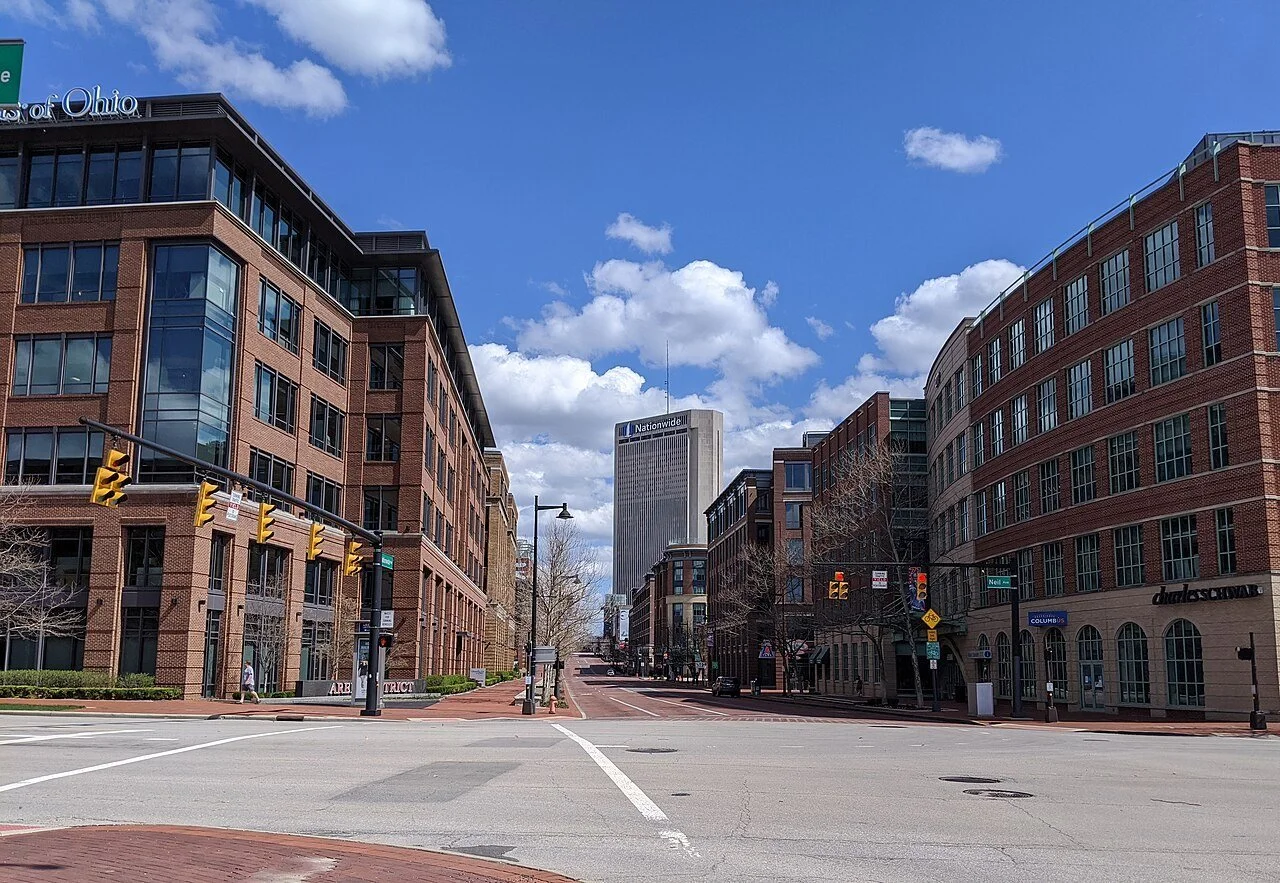
Locals split it into districts. The Arena District is the northwest corner along the river. The core is the office towers and the Statehouse, with the Scioto Mile riverfront and Columbus Commons on its edges. The Discovery District is the east side, around Columbus State and the art museum. Just past the freeway to the south is the Brewery District, and across the river to the west is Franklinton.
The story behind it
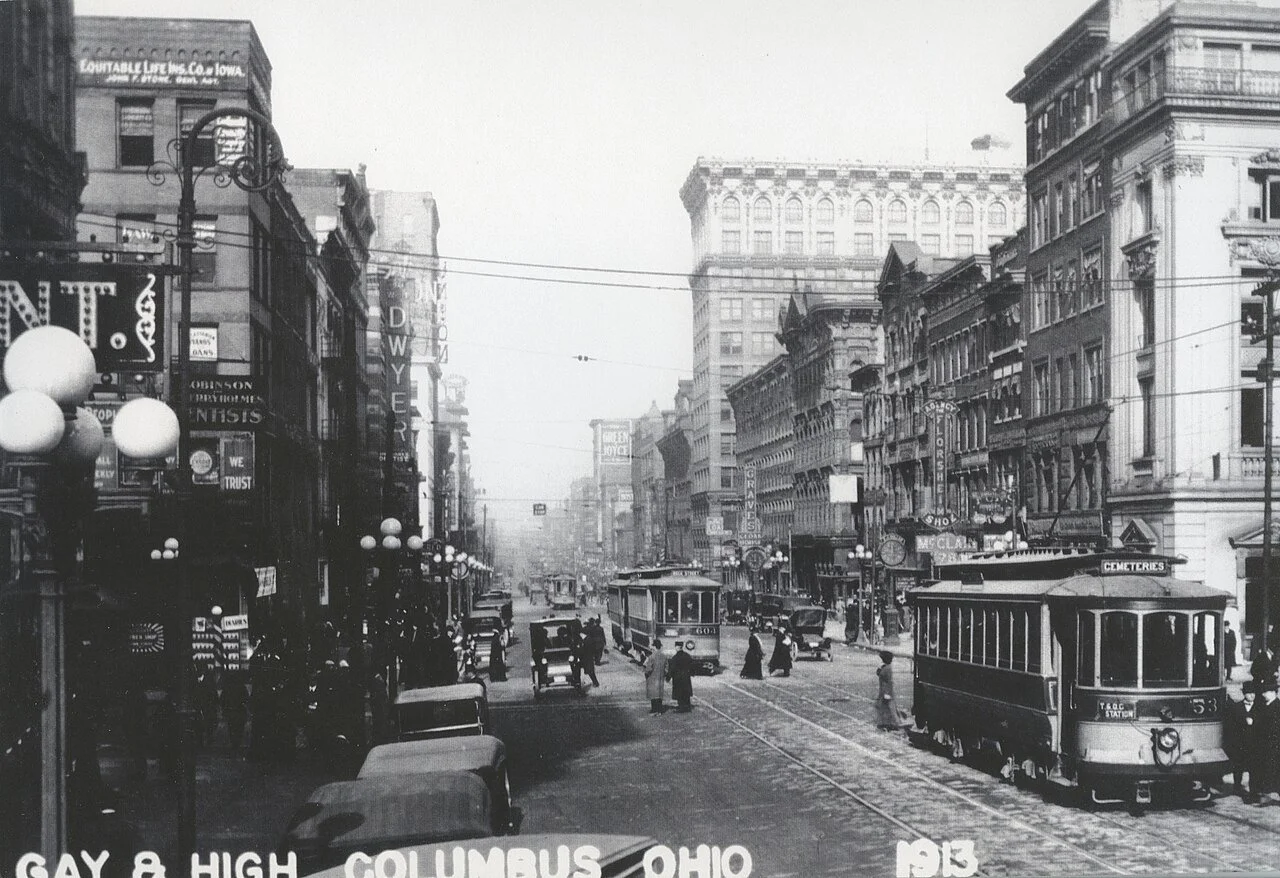
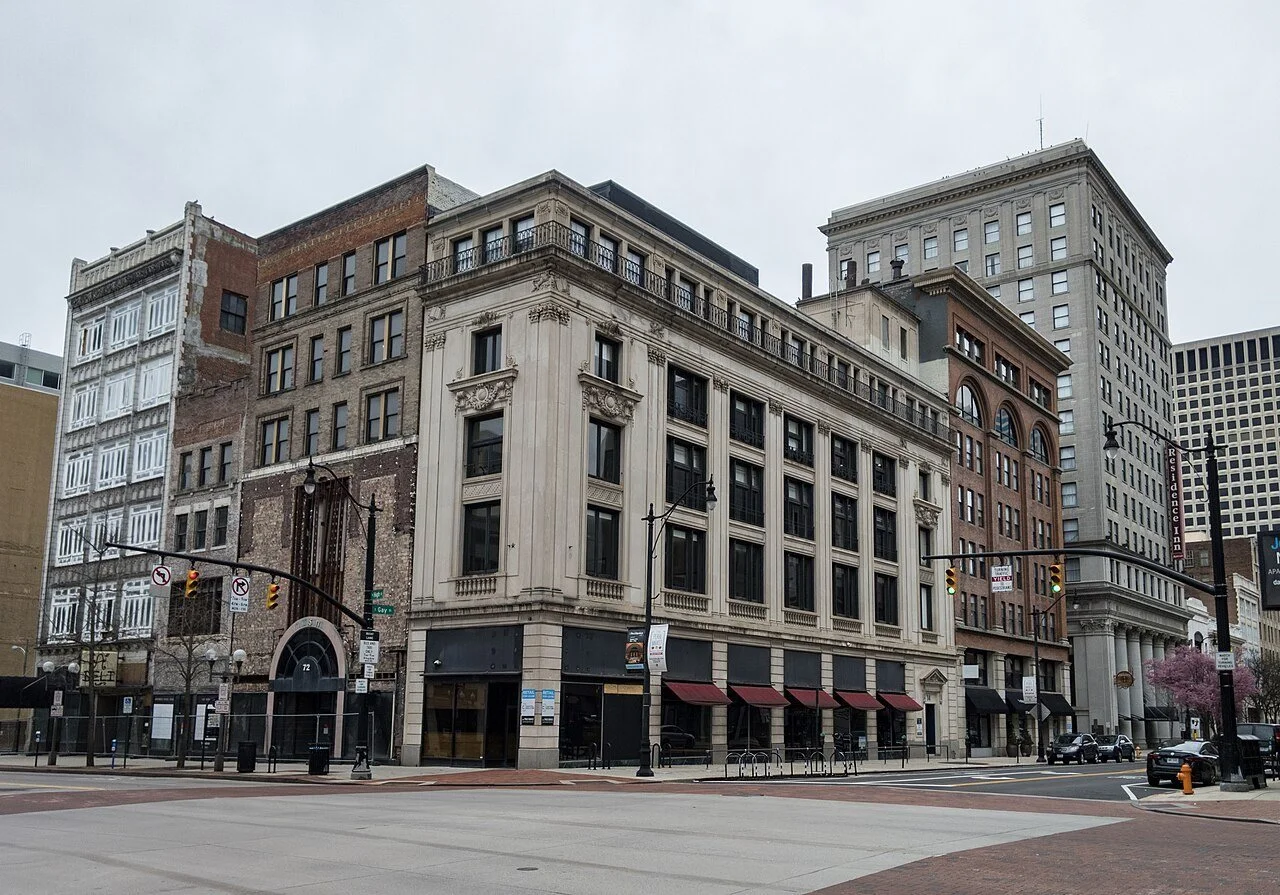
Columbus was laid out in 1812 on the high east bank of the Scioto, across the river from Franklinton, the older frontier settlement. It was built to be the state capital, and the Statehouse at Broad and High has anchored downtown ever since. By the early 1900s, the blocks along High and Gay Streets were lined with banks, hotels and department stores, and many of those buildings are condos today.
The modern comeback started in the Arena District. The Ohio Penitentiary sat on that land along the river from 1834 until it closed in 1984. Nationwide Arena opened on the site in September 2000, and Huntington Park followed in 2009, with apartments, condos, offices and restaurants filling in around them. In 2011 the closed City Center mall came down and became Columbus Commons, and the riverfront was rebuilt into the Scioto Mile.
The pockets
Prices downtown depend more on the building than the block, but each district has its own personality and price range. The rough lines are I-670, Spring Street, Fourth Street, I-71, I-70 and the river.
Left out on purpose: 43215 also covers about 147 sales north of I-670, in the Short North, Victorian Village, Italian Village and Harrison West, and a handful on the edge of German Village. Those neighborhoods are different enough that they get their own guides, so they aren't in the numbers on this page.
What homes sell for
| Median | Range | $/sq ft | |
|---|---|---|---|
| Arena District | $745K | $325K-1.46M | $383 |
| Core and riverfront | $285K | $210-715K | $300 |
| Discovery District | $300K | $195-565K | $263 |
| Brewery District | $320K | $215-410K | $350 |
| Franklinton (east) | $199K | $185-800K | $174 |
| All 274 sales | $330K | $200-955K | $308 |
The range is wide because downtown has two markets. One is studios and one-bedroom condos in converted office buildings, often in the $200,000s. The other is large river-view units in the Arena District and at Miranova, where 24 homes sold for $1 million or more over the past two years. The top sale was about $3.1 million at Parks Edge.
Homes here take a little longer to sell than in most of the city. The median was 30 days on market, and in the core it was closer to two months, which often leaves room to negotiate. The Franklinton range is skewed by a few new-construction sales, so I'd lean on the median there.
The homes
In a downtown condo, a few things matter more than they would in a house. Parking is the big one: some units come with a deeded or assigned garage space, some rent one from a nearby garage, and that can add a real monthly cost. I also look at how many units are rentals, the size of the reserve fund, any planned special assessments and how loud the street is at night if the unit faces a busy block or the arena.
In the older conversions you'll get tall ceilings, big windows and exposed brick, but also older elevators and building systems. In the newer towers you're paying for views, amenities and a doorman, and the HOA fee reflects it.
HOA fees and tax abatements
Abatements are a big part of the downtown math. A building with a new 15-year abatement can carry a much lower tax bill than the same unit next door with two years left. A study out of Ohio State found that buyers effectively pay for the remaining years of an abatement in the purchase price, so a lower tax bill today isn't free money. Before you write an offer, I pull the auditor's record to see how many years are left and estimate what the taxes will be once it's gone.
With HOA fees, compare what's included. Some cover water, gas, trash, building insurance and a concierge, and some cover very little. A higher fee in a full-service building can work out close to a lower fee somewhere you pay those bills yourself.
Getting around
A lot of downtown owners keep one car or none. If you work downtown or in the Short North, you can walk or bus to work, and Ohio State is a short ride up High Street. If you commute to the suburbs, the freeways help, but rush hour on I-71 and I-70 through downtown can be slow.
Parks and everyday errands
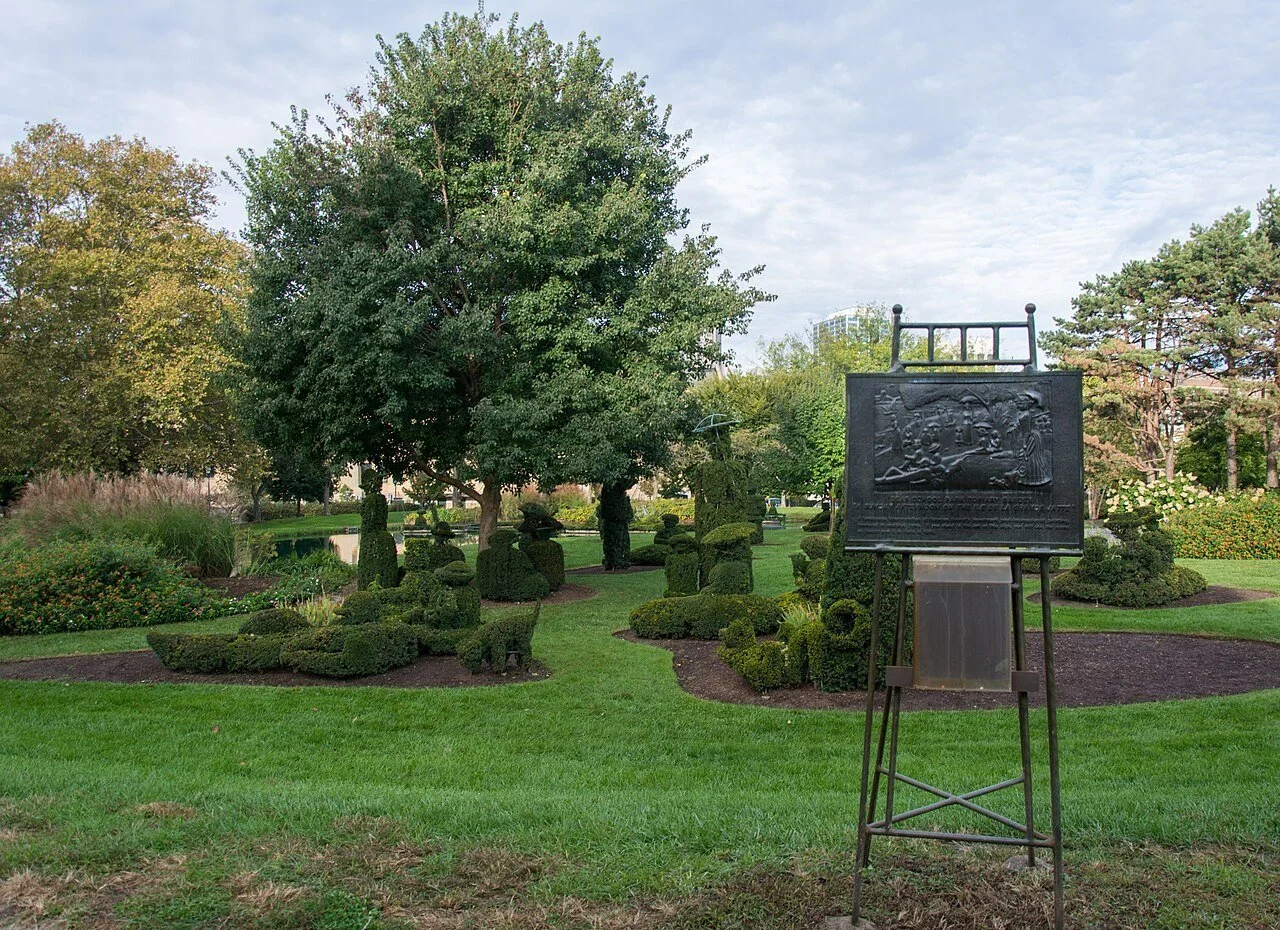
Downtown Columbus Inc. counts more than 140 acres of green space downtown, and the river trails tie most of it together. For groceries, the main stop is the Kroger on West Sycamore Street in the Brewery District. Charmy's Market on North Grant Avenue, formerly The Hills Market, covers the Discovery District with local groceries, a deli and prepared food, and North Market on Spruce Street has been the city's food hall since 1876. In season, the Pearl Market farmers market sets up at Gay Street and Pearl Alley.
More is on the way. A Giant Eagle Market District is planned for the Peninsula development at Broad and Belle Streets in Franklinton, with construction expected to take about two years, and an ALDI is planned near Columbus State at Cleveland Avenue and Spring Street.
Schools
Every home in this guide is in Columbus City Schools, which earned 2.5 stars on the 2025-26 Ohio School Report Card. The district also runs a lottery for its specialty and magnet schools, so assigned schools aren't the only option.
Check the address, not the neighborhood. Attendance areas can change, and a building can sit on a boundary. I confirm the assigned schools for every home before you write an offer.
Downtown Columbus FAQ
What counts as Downtown Columbus?
Most people mean the area inside the freeway loop: I-670 on the north, I-71 on the east, I-70 on the south and the Scioto River on the west, plus the Arena District along the river. This guide also includes the Brewery District just south of I-70 and the east edge of Franklinton across the river, since buyers shopping downtown usually look there too. The Short North and German Village have their own guides.
What do condos in Downtown Columbus cost?
Over the past two years, 274 homes sold through the MLS in the downtown part of ZIP code 43215. The median was about $330,000 and the average about $469,000. The middle 80% of sales ran from about $200,000 to $955,000, and 24 homes sold for $1 million or more, mostly at Parks Edge, Miranova and North Bank.
How much are HOA fees downtown?
Almost every downtown sale (98%) had an association fee. The median was about $488 a month, but it ranges a lot by building. Arena District towers with doormen and amenities ran a median near $880, while Discovery District buildings were closer to $370. The fee often covers water, building insurance and exterior upkeep, so compare what's included, not just the number.
Do downtown Columbus condos have tax abatements?
Many do. A lot of downtown condos were built or converted with 10 to 15 year property tax abatements, and research from Ohio State found buyers effectively pay for the years left on an abatement in the price. Before you write an offer, check how many years are left and what the tax bill will be once it ends.
Is there a grocery store in Downtown Columbus?
Yes, though choices are still limited. There's a full-size Kroger in the Brewery District on West Sycamore Street, Charmy's Market on North Grant Avenue in the Discovery District, and North Market for prepared food and specialty shops. A Giant Eagle Market District is planned for the Peninsula development in Franklinton, with construction expected to take about two years.
What school district is Downtown Columbus in?
Columbus City Schools, which earned 2.5 stars on the 2025-26 Ohio School Report Card. The district also runs a lottery for its specialty and magnet schools. Check the assigned schools for the exact address before you write an offer.

Start here
If downtown is on your list, call or text me at 614-602-1090. I'll set up an alert for the buildings and price range you like, pull the HOA documents and abatement details before you fall for a unit, and tour with you when something good comes up.
Nearby and related: Clintonville, Grandview Heights, Bexley, Columbus market report and the Central Ohio neighborhood guides.
Sales figures are from the Columbus and Central Ohio Regional MLS for closings in ZIP code 43215 south of I-670, including the Brewery District and the east edge of Franklinton and excluding the German Village edge, November 2024 to November 2026, grouped by location, and are believed accurate but not guaranteed. Resident count and park acreage from Downtown Columbus Inc.; school rating from the Ohio School Report Card; walkability from Walk Score. Top photo: Scioto Mile by Scott, Wikimedia Commons, CC BY-SA 2.0. Body photos from Wikimedia Commons: Arena District and High and Gay Streets Historic District by Ɱ (CC BY-SA 4.0); Columbus Commons aerial by J. Jessee (CC BY-SA 2.0); Topiary Park by Ɱ (CC0); the 1913 photo of Gay and High Streets is public domain.
- 300+ closed transactions
- 125+ five-star reviews
- Licensed since 2014
- RE/MAX Hall of Fame